If you have ever bitten into a loaf of bread with that deep, complex tang, open crumb, and crust that crackles just right, you already know the magic that comes from a living culture. That magic often starts with masa madre. This simple mix of flour and water becomes a thriving community of wild yeasts and friendly bacteria that leavens bread the old-fashioned way, long before commercial yeast packets existed. In this guide we will walk through every practical detail so you can grow your own, keep it healthy, and bake bread that tastes like it came from a skilled bakery.
People across Spanish-speaking countries and beyond have passed down jars of masa madre for generations because it delivers flavor commercial yeast simply cannot match. The process is forgiving once you understand the rhythm of feeding and resting. You do not need special equipment or rare ingredients. Flour, water, a clean jar, and a bit of patience are enough to get started. By the end of this long read you will feel confident enough to begin today and keep your culture going for years.
The beauty of working with masa madre lies in its living nature. Every time you feed it you are nurturing a tiny ecosystem that adapts to your kitchen. Temperature, flour type, and feeding schedule all shape the final taste of your loaves. That personal touch is what makes each baker’s bread unique. Ready to dive in? Let’s explore the history, the science, the step-by-step creation process, maintenance routines, troubleshooting, recipes, and more so you can turn masa madre into a reliable kitchen companion.
Understanding What Masa Madre Really Is and Why It Matters
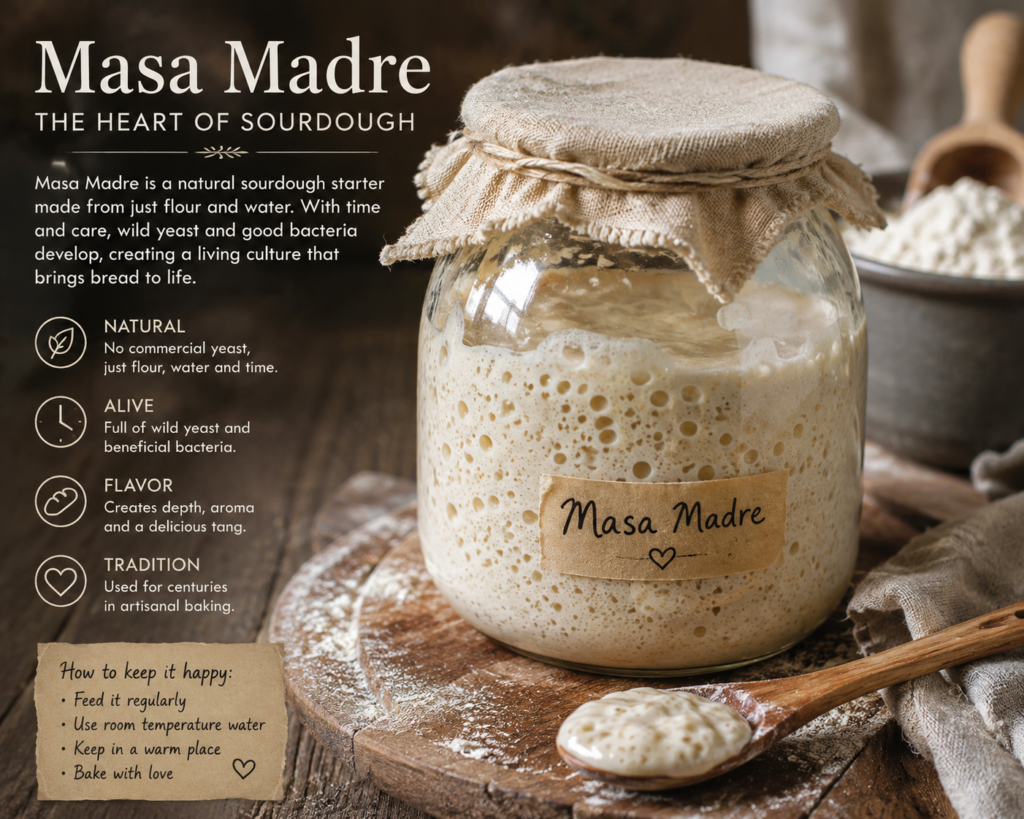
Masa madre is a fermented mixture of flour and water that captures wild yeasts and lactic acid bacteria from the environment and the flour itself. Over days of regular feeding, these microorganisms multiply and create a stable culture capable of raising dough and adding distinctive flavor. Unlike packaged yeast, which is a single strain selected for speed, this natural starter contains a diverse community that produces organic acids, alcohols, and aromatic compounds during fermentation.
The result is bread with better keeping quality, improved digestibility for many people, and a depth of taste that ranges from mild and creamy to boldly sour depending on how you manage the culture. In traditional bakeries the starter is refreshed daily and used as the sole leavening agent. Home bakers can adapt the same principles with a smaller jar kept on the counter or in the refrigerator.
Historically, bakers saved a piece of yesterday’s dough to start today’s batch. That saved portion was the original form of masa madre. Over time the practice refined into the liquid or stiff cultures we know today. In Spain, Latin America, and Italy similar methods developed under different names, all sharing the same foundation of flour, water, and time. Modern science confirms what bakers observed for centuries: the lactic acid bacteria lower the pH, inhibit mold, and break down some of the starches and proteins in ways that commercial yeast does not.
A Brief Look at the History and Cultural Importance of Natural Starters
Bread making with wild fermentation stretches back thousands of years. Archaeological evidence shows fermented doughs in ancient Egypt and the Fertile Crescent. In Europe, especially in regions where commercial yeast was late to arrive, bakers relied entirely on their own cultures. Spanish and Latin American bakers called their living leaven masa madre and treated it with the care given to a family heirloom. Many households still keep a jar that has been fed for decades, sometimes shared among relatives.
During times of scarcity or when packaged yeast was unavailable, these starters kept communities baking. The flavor profile became part of local identity. A bakery in one town might produce loaves with a gentle yogurt-like tang while another town’s bread carried a sharper acidity. That variation came from the specific mix of microbes that thrived in each kitchen’s temperature and flour supply. Today the global sourdough revival has brought renewed attention to these traditional methods, and masa madre sits at the heart of that interest for Spanish-speaking bakers and curious cooks everywhere.
The cultural value goes beyond taste. Maintaining a starter teaches patience and observation. You learn to read bubbles, aroma, and rise as signals of health. In an era of instant everything, the slow daily ritual of feeding masa madre offers a quiet counterpoint. Many bakers describe the process as meditative. The reward is not only better bread but a deeper connection to the craft of baking itself.
The Science Behind the Bubbles and the Tang
When flour meets water, enzymes begin breaking starches into sugars. Wild yeasts present on the grain and in the air consume those sugars and release carbon dioxide, which creates the bubbles that lift the dough. At the same time lactic acid bacteria convert sugars into lactic and acetic acids. The balance between yeast and bacteria determines the final flavor. Warmer temperatures favor yeasts and milder acidity. Cooler temperatures encourage more acetic acid and a sharper taste.
pH drops gradually as acids accumulate. A mature starter usually settles between 3.5 and 4.5. That acidity protects the culture from unwanted molds and spoilage bacteria while also contributing to the characteristic sourdough aroma. Protein-breaking enzymes become more active in the acidic environment, which can improve dough extensibility and create a more open crumb. The same process partially breaks down gluten and phytates, which is why some people find naturally leavened bread easier to digest.
Hydration level also plays a role. A liquid starter (higher water content) tends to develop more lactic acid and a milder flavor. A stiff starter, closer to dough consistency, often produces more acetic acid and a stronger tang. Both styles can be called masa madre depending on regional preference. Understanding these variables lets you steer your culture toward the flavor you prefer simply by adjusting temperature, feeding ratio, and consistency.
Gathering the Simple Ingredients and Tools You Need
You need only two ingredients to begin: flour and water. Whole-grain flour, especially rye or whole wheat, gives the culture a strong start because the bran and germ carry more wild yeasts and nutrients. Once the starter is active you can switch to the flour you plan to bake with most often. Filtered or bottled water is ideal if your tap water is heavily chlorinated, since chlorine can slow the early stages. Leaving tap water out overnight also works for many people.
A clear glass jar lets you watch the rise and fall of the culture. Choose one large enough that the mixture can double without overflowing. A rubber band or piece of tape around the jar marks the starting level so you can judge activity easily. A digital kitchen scale makes feeding accurate and consistent. A spoon or spatula for mixing and a breathable cover such as a coffee filter or loosely fitted lid complete the basic setup. No fancy equipment is required. Many successful bakers started with nothing more than a recycled jar and a bag of flour already in the pantry.
Temperature matters more than most beginners realize. Aim for a spot between 70 and 80 degrees Fahrenheit if possible. Cooler kitchens simply need more time between feedings. A proofing box or the oven with the light on can help in winter. In summer you may need to feed more frequently or move the jar to a cooler location. Observation beats rigid rules. Watch how your particular culture responds and adjust accordingly.
Step by Step Creation of Your First Batch of Masa Madre
Begin by mixing equal weights of whole-grain flour and water. Fifty grams of each is a convenient starting amount. Stir until no dry flour remains. The mixture should look like thick pancake batter. Cover the jar loosely so gases can escape and set it in a warm place for twenty-four hours. On the second day you may see a few bubbles or a slight rise. Even if nothing visible has changed, discard half the mixture and add another fifty grams of flour and fifty grams of water. Mix thoroughly, cover, and wait another day.
Continue this daily discard-and-feed routine. By the third or fourth day the aroma usually shifts from floury to mildly acidic or fruity. Bubbles become more numerous. Around day five to seven the culture should begin doubling in volume within four to eight hours after feeding. When it reliably reaches that point and smells pleasantly tangy rather than unpleasant, your masa madre is ready for baking. Some starters take a little longer depending on ambient temperature and flour quality. Patience during these early days pays off with a vigorous culture.
Once activity is consistent you can reduce the amount you keep to a smaller volume if desired. Many bakers maintain only one hundred grams of starter to minimize waste. The discard can be used in pancakes, crackers, or other recipes so nothing is truly wasted. At this stage you have a living ingredient that will continue to evolve and improve with regular care.
Daily and Weekly Maintenance Routines That Keep Your Culture Strong
An active starter on the counter needs feeding once or twice a day depending on temperature and how quickly it peaks. A common ratio is equal parts starter, flour, and water by weight. After feeding, the mixture should rise and then begin to fall. The ideal time to bake is near the peak, when the culture is most vigorous. If you bake only once a week, refrigerate the starter after it has been fed and allowed to rise. Cold storage slows fermentation dramatically so you can feed less often, typically once a week.
To revive a refrigerated culture, take it out a day or two before baking, discard most of it, feed it, and let it warm up and rise. Two or three feedings at room temperature usually restore full strength. Some bakers prefer a stiff starter maintained at lower hydration. The same principles apply: discard, feed, observe. Consistency in flour type and water temperature helps the microbial community remain stable. Sudden changes can temporarily slow activity, but the culture usually recovers within a feeding or two.
Long-term storage is possible by drying the starter into flakes or freezing a portion. Dried starter can be rehydrated and fed back to full activity. A frozen portion also works as backup. Most bakers, however, find that a small jar in the refrigerator is the simplest ongoing method. The key is never to let the culture starve for too long or become contaminated with mold. A healthy masa madre smells clean and acidic. Any pink, orange, or fuzzy growth means the jar should be discarded and a new culture started.
Recognizing When Your Starter Is Ready and Healthy
A mature masa madre doubles or triples in volume within a predictable window after feeding, usually four to twelve hours at room temperature. The surface is domed and full of bubbles. When you stir it, the mixture feels light and airy. The aroma is pleasantly sour, sometimes with notes of yogurt, apple, or mild vinegar. An underfed or weak starter rises slowly or not at all and may smell overly sharp or like acetone. Overly acidic conditions can be corrected by more frequent feeding or a higher inoculation ratio.
The float test is a popular check: a spoonful of starter dropped into a glass of water should float if it is full of gas. While not foolproof, it is a useful indicator alongside visual rise and aroma. Temperature logs and feeding notes help you learn your culture’s personal rhythm. Over weeks and months the flavor mellows and becomes more complex. Many bakers notice that a well-cared-for starter produces better bread the longer it is maintained.
Common Problems and Straightforward Solutions
If your starter is slow to start, switch to whole-rye or whole-wheat flour for a few feedings and keep the jar warmer. Chlorinated water can be the culprit; try filtered water. A layer of liquid on top, called hooch, signals hunger. Pour it off or stir it in and feed promptly. Mold is rare in a healthy acidic environment but can appear if the starter sits neglected for weeks. When mold shows, discard everything and begin again with a clean jar.
If the culture smells of nail polish remover, it needs more frequent feeding to reduce excess alcohol production. A sluggish rise after refrigeration is normal; two or three feedings at room temperature restore activity. Consistency of flour matters. Switching brands or types abruptly can temporarily slow the microbes until they adapt. Most issues resolve with observation and regular feeding rather than drastic measures.
Exploring Flavor Profiles and How to Influence Them
The taste of bread made with masa madre can range from mild and creamy to boldly acidic. Cooler fermentation and longer times between feedings increase acetic acid and sharper flavor. Warmer conditions and more frequent feeding favor lactic acid and a softer tang. The flour itself contributes. Rye produces a deeper, earthier note. White flour yields a cleaner, milder result. Some bakers maintain two starters, one wheat and one rye, to have different flavor options available.
Hydration also shapes character. Liquid starters often taste milder and more yogurt-like. Stiff starters lean toward vinegar notes. Experimenting with these variables lets you dial in the exact profile you prefer. Many bakers keep a notebook of feeding times, temperatures, and the resulting bread flavor so they can repeat successful combinations. Over time your masa madre becomes a reflection of your kitchen conditions and personal taste.
Building a Levain and Incorporating It into Bread Dough
A levain is simply a portion of your masa madre that has been fed and allowed to peak specifically for a recipe. The night before baking, or several hours ahead depending on temperature, mix a measured amount of starter with fresh flour and water. When that levain has risen and is full of bubbles, it is ready to mix into the final dough. Typical amounts range from ten to thirty percent of the total flour weight, depending on the desired flavor intensity and fermentation speed.
Mixing the levain with the remaining flour, water, and salt begins the bulk fermentation. During this stage the dough develops strength through folds or gentle kneading. The acids and enzymes from the starter continue working, improving extensibility and flavor. Proofing times are longer than with commercial yeast, often several hours at room temperature or overnight in the refrigerator. The slower pace allows more flavor development and better keeping quality in the finished loaf.
Simple Everyday Recipes That Showcase Your Starter
A basic country loaf starts with a mature levain, bread flour, water, and salt. Mix until the dough comes together, rest, then perform a series of stretch-and-folds over a couple of hours. Shape, proof, and bake in a hot Dutch oven for a crisp crust and open crumb. The same starter can power pizza dough, flatbreads, muffins, and even sweet enriched doughs when balanced with a bit of commercial yeast if desired.
Discard recipes turn the portion you remove during feeding into something delicious. Pancakes, waffles, crackers, and quick breads all benefit from the tang and tenderness the discard provides. Because the discard is not at peak activity, these recipes usually include a small amount of baking powder or soda for lift. Using discard regularly reduces waste and gives you more opportunities to enjoy the flavor of masa madre beyond traditional loaves.
Nutritional and Digestive Advantages of Naturally Leavened Bread
Long fermentation with masa madre reduces phytic acid, which can interfere with mineral absorption. Some of the gluten proteins are broken down by the acids and enzymes, making the bread gentler for certain sensitive individuals. The organic acids also lower the glycemic response of the finished loaf compared with yeasted bread of similar ingredients. The complex flavor often means people are satisfied with smaller portions, and the improved keeping quality reduces food waste.
These benefits depend on fermentation time and the specific microbial community in your starter. Not every claim applies equally to every loaf, yet many bakers and eaters notice real differences in how they feel after eating naturally leavened bread. The combination of better taste and potential digestive ease is one reason the method continues to gain popularity.
Variations Across Cultures and Flour Types
In Italy a stiff version known as lievito madre is often maintained with lower hydration and sometimes a touch of honey or fruit in the early stages. French bakers work with liquid levain. German and Scandinavian traditions favor rye-based cultures. All of these are close relatives of masa madre. The core principle remains the same: flour, water, time, and care.
Experimenting with different flours expands the possibilities. Spelt, einkorn, and other heritage grains bring unique flavors and can be used to create specialty starters. Gluten-free versions using rice, buckwheat, or other flours are possible though they require different handling because they lack the same gluten structure. The microbial principles still apply, and many bakers successfully maintain gluten-free cultures for their baking needs.
Tips for Baking Success with Your Living Culture
Weigh ingredients for consistency. Temperature control during fermentation is more important than exact clock times. Learn to read the dough rather than following a rigid schedule. Steam in the oven during the first part of baking helps achieve a good crust. Scoring the loaf just before baking controls expansion and creates an attractive pattern. Cool the bread completely before slicing so the crumb sets properly.
Keep a simple log of feeding times, ambient temperature, and baking results. Patterns emerge that help you predict how your particular masa madre will behave in different seasons. Share a portion with friends so the culture lives on in more kitchens. Many bakers find community through starter swaps and shared recipes. The living nature of the culture encourages connection as much as good bread.
Long-Term Care and Passing On Your Culture
A well-maintained starter can last indefinitely. Some commercial bakeries use cultures that are decades or even centuries old. At home the same longevity is possible with regular attention. If you travel, dry a portion or leave detailed instructions for a friend. Freezing a backup sample provides peace of mind. When the culture is thriving, consider naming it. Many bakers develop an affectionate relationship with their jar and enjoy the continuity it represents across batches of bread.
Seasonal changes affect activity. In summer you may feed more often or refrigerate more of the time. In winter a warmer spot or less frequent feeding keeps the balance. The culture adapts. Your role is to observe and respond rather than force a fixed routine. Over years the flavor becomes more refined and the performance more predictable. That long relationship is one of the quiet joys of baking with masa madre.
Table of Typical Feeding Ratios and Expected Rise Times
| Feeding Ratio (Starter:Flour:Water) | Approximate Peak Time at 75°F | Flavor Tendency | Best Use |
|---|---|---|---|
| 1:1:1 | 4–8 hours | Balanced | Everyday loaves |
| 1:2:2 | 6–12 hours | Milder | Longer fermentation |
| 1:3:3 | 8–16 hours | Complex | Overnight proofs |
| Stiff (1:2:1) | 6–10 hours | Sharper | Italian-style breads |
This table offers starting points. Your kitchen temperature and flour will shift the exact timing. Adjust based on what you observe.
Memorable Quotes from Experienced Bakers
One longtime baker once said, “A healthy masa madre is like a quiet friend that shows up every day and makes the bread better than you could alone.” Another noted, “The first time your starter doubles on schedule you feel like you have unlocked an ancient secret.” A third observed, “You do not control the culture so much as collaborate with it.” These simple reflections capture the partnership that develops between baker and starter.
Advanced Techniques for Flavor and Texture Control
Once the basics are comfortable you can explore techniques such as retarded fermentation in the refrigerator, multiple preferments, or incorporating a small percentage of the previous day’s dough. Autolyse periods before adding the levain improve gluten development. Higher hydration doughs create more open crumb but require careful handling. Steam injection or Dutch-oven baking maximizes oven spring and crust quality. Each variable interacts with the activity of your masa madre, so small changes produce noticeable results.
Some bakers maintain a “mother” culture at low activity in the refrigerator and build a fresh levain for each bake. Others keep a larger volume on the counter and feed daily. Both approaches work. The choice depends on how often you bake and how much discard you want to manage. Experimentation within a consistent framework leads to personal mastery.
Troubleshooting Flavor Issues in Finished Bread
If the loaf tastes too sour, shorten the final proof or use a younger levain. If the flavor is bland, extend fermentation or increase the percentage of starter in the dough. Dense crumb often points to under-fermentation or a weak starter. Over-proofed dough collapses and produces a gummy texture. Learning to judge the dough by feel and appearance rather than the clock solves most problems. The living nature of masa madre means every bake is slightly different, yet the overall quality improves with practice.
Seasonal Adjustments and Travel Considerations
Summer heat speeds everything up. Feed more frequently or use cooler water. Winter slows activity, so longer rise times or a warmer spot help. When traveling, a dried starter is the most portable form. Simply spread a thin layer on parchment, dry completely, and store in an airtight container. Rehydration takes a few feedings but restores full strength. Friends and family often appreciate receiving a portion of a proven culture. Passing along masa madre continues a tradition that has linked bakers across generations.
Expanding Beyond Bread: Other Uses for Your Starter
Pancakes and waffles gain tenderness and a gentle tang from discard. Crackers become crisp and flavorful. Pizza dough develops complex taste with a long cold ferment. Even cake and cookie recipes can incorporate a small amount of discard for moisture and subtle acidity. The possibilities grow as you become comfortable with the culture’s behavior. Many bakers keep a running list of favorite discard recipes so nothing is wasted and every feeding contributes to the kitchen’s output.
Building Confidence Through Repeated Practice
The first few loaves may not be perfect. That is normal. Each bake teaches something new about timing, shaping, and the response of your particular masa madre. Take notes. Photograph the crumb. Taste critically. Over time the process becomes second nature. The satisfaction of pulling a beautiful loaf from the oven, knowing it began with a simple mixture of flour and water that you nurtured, is hard to match. That sense of accomplishment keeps many bakers returning to the craft for years.
Conclusion
Creating and maintaining masa madre opens a door to better bread and a more intentional way of baking. From the first mix of flour and water through years of daily or weekly care, the culture becomes a reliable partner in the kitchen. The flavor, texture, and keeping quality of the loaves it produces stand apart from commercial yeast breads. The process itself rewards observation and patience. Whether you bake every day or only on weekends, a healthy starter adapts to your rhythm. Start with a small jar, feed it consistently, and watch it come alive. The bread that follows will remind you why this ancient method continues to thrive in modern kitchens. Once you experience the difference, you may never want to return to anything else.
What exactly is masa madre and how does it differ from commercial yeast?
Masa madre is a living culture of wild yeasts and lactic acid bacteria grown in a mixture of flour and water. Commercial yeast is a single selected strain of Saccharomyces cerevisiae designed for rapid, predictable rising. The natural culture produces a wider range of flavor compounds, organic acids, and enzymes that improve keeping quality and often digestibility. While commercial yeast works quickly and requires little maintenance, masa madre needs regular feeding but rewards the baker with deeper taste and a more complex crumb structure.
How long does it take to create a usable masa madre from scratch?
Most starters become active enough for baking within seven to fourteen days when fed daily at a moderate room temperature. Whole-grain flour and a warm environment speed the process. Some cultures show strong activity earlier, while cooler kitchens may need a few extra days. The key sign is consistent doubling of volume within several hours after feeding together with a pleasant acidic aroma.
Can I keep masa madre in the refrigerator and still bake good bread?
Yes. Refrigeration slows fermentation so you can feed once a week instead of daily. To bake, remove the starter a day or two ahead, discard most of it, feed it, and allow it to warm and rise through one or more feedings until it reaches peak activity. Many home bakers maintain their culture this way with excellent results.
What should I do with the discard when feeding masa madre?
The portion removed during feeding can be used immediately in pancakes, waffles, crackers, muffins, or quick breads. It adds flavor and tenderness even though it is not at peak leavening strength. Some bakers collect discard in a separate container in the refrigerator for a few days and then bake a larger batch of discard recipes. Using the discard regularly reduces waste and expands the ways you enjoy the culture.
Why does my masa madre sometimes smell like acetone or alcohol?
That aroma usually means the culture has run out of food and begun producing excess alcohol. Feed it more frequently or use a larger inoculation of fresh flour and water relative to the amount of starter kept. After a couple of regular feedings the smell should return to a clean, pleasantly sour profile. Consistent care prevents the issue from recurring.