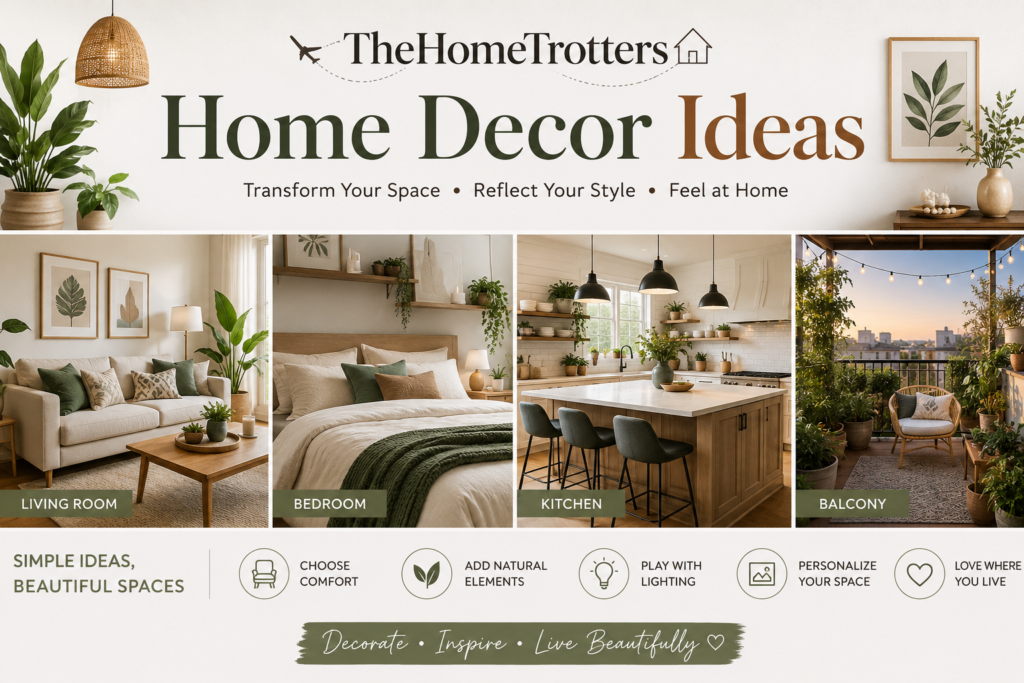
Walking into a home that feels both beautiful and comfortable is one of life’s quiet pleasures. You know the feeling. Soft light filters through the curtains, textures invite you to sit down, and every corner seems to hold a little piece of the people who live there. That is the heart of home decor ideas thehometrotters approach. It is less about following strict rules and more about blending comfort, personality, and practical beauty so your space actually works for real life.
This style draws from travel stories, natural materials, and the idea that a home should evolve with you rather than look like a showroom. Whether you live in a small apartment or a larger house, the principles stay the same. Start with what you already have, add thoughtful layers, and let the space reflect your daily rhythms. In the pages ahead you will find detailed guidance on colors, furniture, lighting, textures, plants, DIY projects, and room-by-room ideas that help you put these principles into practice without overwhelm or unnecessary expense.
The goal is simple. Create rooms that feel welcoming the moment you walk through the door and still look put-together when friends drop by. You do not need a huge budget or professional training. You need a clear sense of what makes a space feel good to live in, plus a willingness to experiment a little.
Understanding the Core Philosophy Behind These Ideas
Home decor ideas thehometrotters style rests on a few steady beliefs. First, comfort matters as much as appearance. A sofa that looks stunning but feels stiff will never become the heart of the room. Second, personality should show. Souvenirs from trips, family photos, handmade pieces, and favorite books all belong in the mix. Third, function and beauty can share the same space. Storage can look attractive. Lighting can serve multiple purposes. Furniture can move with the seasons.
This approach often mixes global influences with everyday practicality. Think handwoven textiles next to a simple modern sofa, or a rustic wooden table paired with clean ceramic dishes. The result feels collected over time rather than purchased all at once. Many people find that once they stop chasing perfect matching sets, their homes start to feel more authentic and relaxed.
Another quiet strength of this way of decorating is its flexibility. You can lean more minimalist one year and add warmer layers the next. You can keep a mostly neutral base and introduce color through accessories that are easy to change. The focus stays on creating an atmosphere that supports how you actually live, whether that means quiet evenings with a book or lively gatherings with friends and family.
Building a Color Palette That Feels Right
Color sets the emotional tone of every room. In the spirit of home decor ideas thehometrotters thinking, most people start with a calm, grounded base. Warm whites, soft beiges, gentle grays, and sandy neutrals create a sense of openness and rest. These shades work especially well in living rooms and bedrooms because they make spaces feel larger and more peaceful.
Once the base is set, introduce deeper or warmer accents. Terracotta, olive green, muted blues, and soft rust tones add interest without overwhelming the eye. The classic 60-30-10 guideline remains useful here. Roughly sixty percent of the room stays in the main neutral, thirty percent moves into a secondary color through larger pieces like a rug or curtains, and ten percent brings in a stronger accent through pillows, artwork, or a single painted wall.
Many people discover that testing colors in real light changes everything. Paint a large sample board and live with it for a few days. Morning light, afternoon sun, and evening lamps all affect how a shade reads. Soft earthy tones tend to stay friendly across these shifts, which is why they appear so often in this style of decorating.
Do not feel locked into one palette for the entire house. A bedroom can lean cooler and quieter while a kitchen welcomes a touch more energy. The connection comes through repeating a few shared tones or materials so the whole home still feels cohesive when you move from room to room.
Arranging Furniture for Flow and Conversation
How furniture sits in a room often matters more than the individual pieces themselves. Poor arrangement can make even beautiful items feel awkward. Start by identifying the natural pathways people take through the space. Keep those clear. Then create conversation areas where seats face one another at a comfortable distance.
In living rooms, floating a sofa away from the wall can open up the floor and create a more intimate grouping. Pair it with a couple of chairs and a low table within easy reach. In smaller rooms, choose pieces that serve more than one purpose. An ottoman with storage, a bench that tucks under a table, or a console that doubles as a desk all help keep the space feeling open.
Scale is another quiet factor. Oversized furniture in a modest room can make everything feel cramped, while tiny pieces in a large room look lost. Measure before you buy or rearrange. Leave enough room to walk around without turning sideways, and make sure every seat has a surface nearby for a cup or a book.
Lighting and furniture work together. Place a floor lamp near a reading chair or a pair of table lamps on either side of a sofa to define the seating area. When the arrangement supports both movement and lingering, the room begins to feel welcoming almost on its own.
Layering Textures for Depth and Comfort
A room that relies only on color and shape can feel flat. Texture brings it to life. Mix smooth and rough, soft and structured, matte and slightly shiny. A linen sofa looks richer with a wool throw and a few velvet or embroidered cushions. A wooden coffee table gains interest when a ceramic vase and a woven tray sit on top.
Rugs are one of the most effective ways to add texture underfoot. Natural fibers such as jute or sisal ground a space while remaining practical. Softer wool or cotton rugs invite bare feet and define seating areas. Layering a smaller patterned rug over a larger neutral one creates visual interest without requiring new flooring.
Curtains, throws, and even the finish on furniture all contribute. Sheer curtains soften light while heavier drapes add weight and privacy. A smooth painted wall next to a rough wooden beam or a textured wallpaper panel creates contrast that the eye enjoys exploring. The key is balance. Too many competing textures can feel busy, so choose three or four that work well together and repeat them throughout the room.
This layering approach is central to many home decor ideas thehometrotters inspired spaces because it creates warmth without clutter. The room feels finished and inviting even when surfaces remain relatively clear.
Lighting That Changes the Mood
Lighting does more than make a room usable. It shapes how the space feels at different times of day. Relying on a single overhead fixture often leaves rooms looking flat and harsh. Instead, aim for three layers. Ambient light provides overall illumination, ideally controlled by a dimmer. Task lighting focuses on activities such as reading or cooking. Accent lighting highlights artwork, plants, or architectural details.
Warm-toned bulbs generally create a cozier atmosphere than cool ones. In living areas and bedrooms, softer warm light encourages relaxation. In kitchens and workspaces, a slightly brighter but still warm tone keeps the space functional without feeling clinical.
Table lamps, floor lamps, and wall sconces give flexibility. Place a lamp in a dark corner and watch the whole room brighten. String lights or candles add gentle sparkle for evenings. Even a simple change like swapping out harsh bulbs for warmer ones can transform the evening atmosphere of a home.
Natural light deserves equal attention. Keep windows clear of heavy blockages during the day. Sheer curtains or light-filtering shades allow brightness while maintaining privacy. Mirrors placed opposite windows bounce light deeper into the room and make smaller spaces feel more open.
Bringing Nature Indoors
Plants remain one of the simplest and most effective ways to refresh a home. They add color, soften hard edges, and improve air quality. Low-maintenance options such as snake plants, pothos, and ZZ plants thrive in a range of light conditions and forgive occasional neglect. Larger statement plants like fiddle leaf figs or rubber plants can anchor a corner and draw the eye upward.
Group plants at different heights for a more natural look. A tall plant on the floor, medium ones on a shelf or stand, and trailing varieties on higher surfaces create a layered effect. Choose containers that complement your palette. Ceramic, terracotta, woven baskets, and simple concrete pots all fit well with the grounded materials favored in this style.
Beyond living plants, natural materials reinforce the connection to the outdoors. Wooden trays, stone coasters, linen napkins, and woven baskets introduce organic texture. Fresh flowers or branches in a simple vase bring seasonal change without much effort. These elements keep a home feeling alive and connected to the world outside its walls.
Adding Personal and Travel-Inspired Touches
A home becomes memorable when it reflects the people who live there. Display items that carry meaning. Framed photos, postcards, small sculptures from travels, or handmade ceramics all tell stories. Arrange them thoughtfully rather than scattering them randomly. A gallery wall of mixed frames can become a focal point, while a single special object on a shelf can hold quiet presence.
Travel-inspired pieces work especially well within home decor ideas thehometrotters thinking. A textile from a market, a ceramic bowl found on a trip, or a print that reminds you of a favorite place adds layers of memory. Style these items with the same care you would give any other decorative object. Give them space to breathe so they do not feel like clutter.
Books also contribute personality. Stack a few on a coffee table or line a shelf with titles you actually read. Mixing books with objects, plants, and small art pieces creates shelves that feel collected rather than staged. The goal is a space that feels like it belongs to you, not like it was copied from a catalog.
Practical Budget-Friendly Projects
Many satisfying changes cost little more than time and creativity. Painting an accent wall or the insides of open shelves can shift the entire mood of a room. Updating cabinet hardware in a kitchen or bathroom offers high visual return for modest investment. Refinishing or painting an old piece of furniture often costs less than buying new and gives the item new life.
Simple DIY projects fit well here. Turn thrifted frames into a cohesive gallery by painting them the same color. Make a throw pillow cover from fabric remnants or an old sweater. Create floating shelves from reclaimed wood for a custom look. Even rearranging what you already own can feel like a new room when done with intention.
Shopping secondhand, at flea markets, or through local online marketplaces often yields unique pieces at lower prices. Look for solid construction and interesting lines rather than perfect condition. A little paint, new knobs, or a different arrangement can transform an overlooked item into a favorite.
Living Room Ideas That Invite Gathering
The living room often serves as the social heart of the home. Start with comfortable seating arranged for conversation. Layer a soft rug under the main grouping. Add a mix of throw pillows and a couple of blankets so the space feels ready for use. Keep surfaces relatively clear but not empty. A few books, a plant, and one or two meaningful objects usually suffice.
Lighting should support both daytime brightness and evening coziness. A combination of overhead, floor, and table lamps allows flexibility. If the room lacks architectural interest, create a focal point with a gallery wall, a large piece of art, or a thoughtfully styled bookshelf.
For smaller living rooms, choose furniture with visible legs to keep the floor feeling open. Use mirrors to expand the sense of space. Vertical storage and multi-use pieces help maintain calm. The result should feel ready for both quiet evenings and lively visits.
Creating a Restful Bedroom
Bedrooms benefit from a quieter approach. Soft neutrals or gentle earth tones encourage rest. Layer bedding thoughtfully. A quality duvet or comforter, a couple of pillows, and one or two throws usually create enough texture without excess. Keep nightstands simple and functional with a lamp, a book, and perhaps a small plant or dish for everyday items.
Clutter is the enemy of calm in a bedroom. Use closed storage where possible and keep surfaces clear. Soft lighting, blackout or light-filtering curtains, and a comfortable rug underfoot all support better sleep. A single piece of art or a small collection of meaningful objects above the bed can provide a gentle focal point without overstimulating the eye.
Kitchen and Dining Spaces That Feel Warm
Kitchens work hard, so decoration should support function. Open shelving can display attractive dishes and glassware while keeping everyday items accessible. Consistent storage containers and a limited color palette on the counters reduce visual noise. Fresh herbs in small pots or a bowl of seasonal fruit add life.
In dining areas, a simple table with comfortable chairs forms the foundation. A rug under the table anchors the space. Soft lighting, perhaps a pendant or a pair of sconces, creates atmosphere for meals. Textiles such as placemats, napkins, or a simple runner introduce color and texture that can change with the seasons.
Refreshing the Bathroom
Even a small bathroom can feel more considered with a few thoughtful choices. Replace plastic dispensers with ceramic or glass ones. Keep towels neatly folded or rolled. A small plant that tolerates humidity, a framed print, or a simple shelf for everyday items can elevate the space. Warm lighting around the mirror improves the daily routine. Consistent colors and materials help the room feel intentional rather than purely utilitarian.
Solutions for Smaller Homes and Apartments
Limited square footage rewards clever choices. Light colors and reflective surfaces expand the sense of space. Multi-functional furniture reduces the number of pieces needed. Vertical storage draws the eye upward and frees floor area. Mirrors placed thoughtfully bounce light and create depth.
Keep pathways clear and avoid overcrowding surfaces. A few well-chosen larger items often look better than many small ones. In studios or compact apartments, define zones with rugs or furniture placement rather than walls. The same principles of texture, personal touches, and good lighting still apply and can make a small space feel generous.
Updating Decor with the Seasons
Seasonal shifts keep a home feeling fresh without major expense. In cooler months, add heavier throws, deeper colors through pillows, and warmer lighting. In warmer months, lighten textiles, introduce brighter accents, and bring in more greenery or fresh flowers. Rotating a few key items between rooms or into storage prevents the home from feeling static.
Holiday or special-occasion decorations work best when they complement the existing palette rather than fighting it. A few well-chosen pieces often create more impact than covering every surface.
Common Pitfalls and How to Avoid Them
One frequent mistake is buying too many matching sets. Spaces feel more interesting when pieces have slight variation in material or finish. Another is ignoring scale. Measure rooms and doorways before bringing large items home. Overcrowding surfaces with small objects can create visual stress, so edit regularly.
Lighting is often an afterthought. Plan for multiple sources from the beginning. Finally, forget the idea that everything must be new or perfect. A mix of old and new, high and low, often produces the most characterful and livable results.
“A home should feel like a gentle exhale at the end of the day, not a space that demands constant performance.”
This reminder captures the spirit well. When decoration serves comfort and personality, the result tends to last longer and feel more satisfying than trend-driven rooms that quickly date.
Here is a simple reference table for balancing elements in a typical living space:
| Element | Suggested Approach | Example Materials or Colors |
|---|---|---|
| Base color | Soft neutrals for calm | Warm white, beige, light gray |
| Secondary color | Earthy or muted tones | Olive, terracotta, soft blue |
| Accent | Stronger pops in small doses | Deep green, rust, or jewel tones |
| Main textures | Mix of soft and natural | Linen, wool, wood, jute |
| Lighting layers | Ambient + task + accent | Dimmer overhead, lamps, soft LEDs |
| Personal items | Meaningful and edited | Photos, travel finds, books |
Use the table as a flexible guide rather than a rigid formula. Adjust according to the light in your rooms and the way you use each space.
Frequently Asked Questions
What makes home decor ideas thehometrotters different from other styles?
Home decor ideas thehometrotters emphasize comfort, personal story, and practical beauty over strict trends or perfect matching. The approach encourages mixing natural materials, travel-inspired pieces, and everyday function so the home feels collected and livable rather than staged. It prioritizes spaces that support real daily life while still looking intentional and welcoming.
How can I start applying these ideas on a tight budget?
Begin with what you already own. Rearrange furniture for better flow, edit clutter, and refresh textiles you have. Add one or two inexpensive plants, update lighting bulbs to warmer tones, and consider painting a single accent wall or the insides of shelves. Thrift stores and secondhand markets often yield unique pieces that fit the layered, personal aesthetic without large spending.
Are these decorating ideas suitable for small apartments?
Yes. The focus on light colors, multi-functional furniture, vertical storage, and careful editing works especially well in compact spaces. Mirrors, good lighting, and a limited but thoughtful selection of personal objects help small rooms feel open and calm rather than crowded.
How important is lighting in this style of home decorating?
Lighting plays a central role. Multiple layers of warm light create depth and flexibility that a single overhead fixture cannot match. The right lighting supports both practical tasks and relaxed evenings, making the entire atmosphere more inviting and comfortable.
Can I mix different styles within the same home?
Absolutely. The approach thrives on thoughtful mixing. A modern sofa can sit comfortably with a rustic table or a global textile. The key is repeating a few colors, materials, or textures so the combination feels intentional rather than random. Personal items and natural elements often serve as the connecting thread.
How often should I update my decor?
There is no fixed schedule. Many people refresh textiles and accessories with the seasons and make larger changes only when a room no longer feels good to live in. Small ongoing edits keep the space feeling current without the pressure of constant overhauls.
Conclusion
Creating a home that feels both beautiful and truly livable is an ongoing conversation between your space and the way you use it. The principles behind home decor ideas thehometrotters offer a flexible, human-centered path. Focus on comfort, introduce texture and natural materials, layer lighting thoughtfully, and leave room for the objects and memories that make the space yours.
You do not need to transform every room at once. Start with one area that bothers you most or that you use every day. Improve the lighting, adjust the furniture, add a plant or two, and clear the surfaces. Notice how those small shifts change the way the room feels. Then move to the next space when you are ready.
Over time the home becomes a reflection of the life lived inside it. Soft places to rest, surfaces that invite use, colors that calm or energize as needed, and personal details that spark quiet recognition. That combination of practicality and warmth is what makes a house feel like home. Take the ideas that resonate, adapt them to your own rooms and budget, and enjoy the process of making the space around you more supportive and more beautiful one thoughtful step at a time.