Signature: 7HeDU9ycoZk+Crgd8F0wgSrk3ySk5G4zxgXmAiuLc9f9WdpP+x72PUHud7+e7aDImbQpoQOMNWyadTvJw5mjyA9AyXi/QxdkAoPzb4jFY3vzOXd46pvCmPbKkPKotzVD/hBoZN2pVbZ20cLK4pMNmkYyt2zkxLuiGZyarLzjU+fHs1TiWp/Rz29vk7Xg+aN6634dC/bYKFny98S+qnFl9cojPEpBabf306+hggbI7s9EMhrQ5hSa9Sle60heGHBxBMc6IEdhmLx4J+rfLa7syw8BQGCBFuhKpJLsa6hXYi4yQHdzZeQ9oxaRM/+tNxq/GNzsW0qpd906ZVN5Stj5cskG7U5Hn6uxNsljSRbW/X40Klv6FHpNkTCbM8BAk7qOSQGJky5Ug9WD348EATjE1+Y0aNlm0DnMTf4yZGkQ23tqtINMIs86G8uCo23aY6rK5Qe+em6u8etOMuEE9tYD1JerkiUUOZ9JeTlAE+A7aotlehrYOaYa/H9/vq9CzLAoiFojRS5SkpxXe7zeouan6ESYTNglkGuLPVstgbbSCye5+4rKog8V+5lh0Bmwr8+axsAUWyQ3D9aws7lOYtw4gjElOb8YPlJP4h2NC8/fq7SioRUYnmoHR4Xa9BS6nbDENqu9LTevkMGcBjcXbNM5n2NO34p1Qw4t+2Bx4ys94zFSZTt8uZUTDqC5oOHQwlZyCKI8F6vGXJPmIHwwscALUAWjEfddGB8C8Xz/0tGRmUdS1zVsEDx89QlRqIt9ruRYfAkBDyJqXwz0QQkbG3VoDjtnFW9VmLQLnBkE5tN2v/o+nsAGCFodKgEY2RFHgYVHSb3bqRansfZBWET283Vh5BmBJPBG2OaSUOPEtd1RlY1hzNPD6zpyTX29fLtbQperO4B0yBuMXmCEAmY8QaqwrpKdsp/KqML/IwrS/yseJRdY+Dr/2Ezo4OXElnel4EszqBIa5bsNPvTKep2qouoRN6fN+UneqtHTQ5dgAX/h7HM=
Most people who type Don Baskin net worth into a search bar expect some flashy Silicon Valley number or celebrity fortune. What they get instead is a far more grounded American story. Don Baskin built his money the old-fashioned way in Covington, Tennessee, selling commercial trucks and heavy equipment, winning drag racing championships, and quietly filling warehouses with more than a thousand classic and performance cars. No public company filings exist. No official net worth statement has ever been released. Estimates still range from about fifty million dollars on the low end to as high as five hundred million when the full car collection, real estate, and dealership assets are counted together. The truth sits somewhere in that wide band, and the real value of the story is how he got there.
He started as a teenager flipping trucks for profit. He turned that skill into a full-scale commercial truck and equipment business that has operated for decades. Along the way he became a multiple-time drag racing champion and assembled one of the largest private muscle-car collections in the United States. The combination of steady cash flow from truck sales, appreciating classic cars, and commercial land creates a private fortune that few outside the automotive and motorsports worlds fully understand. This article walks through every major piece of that picture in plain language so readers can see exactly why the conversation around Don Baskin net worth keeps growing.
Early Life and the First Real Profit
Don Baskin grew up in a working environment where vehicles were tools, not toys. Tennessee offered plenty of used trucks and not many easy paths to wealth. By the time he was fourteen he had already handled a burnt GMC that needed a new cab. A few hundred dollars of borrowed money and some hard mechanical work turned into a multi-thousand-dollar profit. That single deal changed everything. School became less interesting than the next truck he could buy, fix, and sell.
He kept repeating the process. Local construction crews and farmers noticed the young guy who delivered what he promised. Word of mouth replaced advertising. Cash flow stayed tight at first, but each successful flip added knowledge and capital. The same habits that produced the first profit later scaled into a full dealership. Looking back, the foundation of everything that feeds discussions of Don Baskin net worth began with that teenage decision to treat trucks as inventory rather than just transportation.
The early years also introduced him to drag racing. A Chevelle built for the street became a track car. Local outlaw events and small strips taught him the difference between looking fast and actually winning. Those two interests, trucks and racing, never separated. One funded the other, and both taught the same lesson: know your product better than the person across the table.
Building the Truck Sales Business That Pays the Bills
Don Baskin Truck Sales grew out of years of informal trading. The formal company settled at a practical highway location in Covington, Tennessee. Dump trucks, concrete mixers, utility vehicles, trailers, and heavy construction equipment moved through the yard in steady volume. Customers came for wholesale pricing and honest condition reports rather than fancy showrooms. The business expanded into parts, salvage, and financing options that kept money moving even when new-truck markets slowed.
Industry observers have estimated annual revenue in a broad range that sometimes reaches into the tens of millions. Employee counts have been reported anywhere from a couple of dozen to well over a hundred when the operation runs at full capacity. The exact numbers stay private, yet the visible scale of the inventory and the length of time the company has operated make clear that this is no small side hustle. Commercial land around the facility, often cited at roughly sixty acres, adds another layer of equity. That real estate, the rolling inventory, and the customer relationships form the cash-flow engine behind much of the conversation about Don Baskin net worth.
The business model stays simple on the surface. Buy trucks that people actually need. Price them so a working contractor can walk away feeling he got a fair deal. Keep enough parts and salvage on hand to support the fleet after the sale. Repeat for decades. That steady approach creates the kind of durable wealth that flashy startups often lack.
Drag Racing Titles and the Motorsports Side
Racing started almost as early as the truck trading. A sixteen-year-old with a modified Chevelle found local strips and never looked back. Heads-up competition suited him better than bracket racing. Over the years he campaigned vintage Pro Stock Novas, modern nitrous Camaros, and everything in between. Multiple National Muscle Car Association class titles plus additional NHRA recognition added up to a reported fourteen championships. One of the cars even carried history connected to legendary tuner Bill Jenkins.
The track never stayed separate from the business. Race cars, engines, transmissions, and trailers became inventory just like the commercial trucks. Baskin Motorsports grew as a natural extension, buying and selling the same high-performance parts and complete packages he used himself. At certain points he held ownership or operating involvement with tracks such as Jackson Dragway. The racing résumé adds credibility that no advertising budget could buy and keeps him connected to a network of serious competitors who also become customers.
That dual identity, successful truck dealer and proven champion, strengthens the overall brand. It also explains why so many cars in the collection carry competition history or serious performance pedigree. The racing side is not a hobby bolted onto the business. It is another expression of the same skill set that built the fortune people discuss when they look up Don Baskin net worth.
The 1000-Car Collection That Stops People in Their Tracks
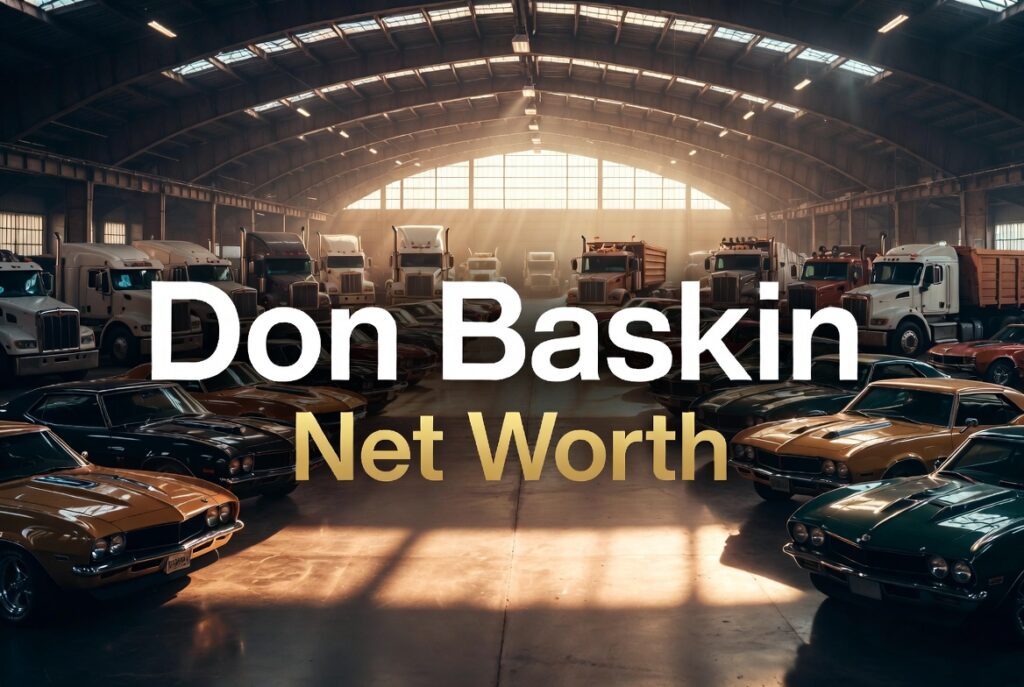
More than one thousand vehicles sit in warehouses that together approach or exceed four hundred thousand square feet in some reports. One facility alone has been described as roughly the size of several football fields. Chevrolet dominates the count. Dozens of first-generation Camaros, multiple COPO and ZL-1 examples, Novas, Corvettes, and Chevelles fill row after row. Ford, Dodge, Pontiac, Buick, and even a few European surprises occupy the remaining space. Hellcats, Super Bees, Grand Nationals, and late-model performance machines sit alongside unrestored barn finds and fully restored showpieces.
Storage alone requires serious planning. Cars packed tightly mean careful rotation for the ones that actually get driven. Reports suggest he puts roughly forty vehicles on the road each year. The collection functions as both passion project and appreciating asset. Rare muscle cars have shown strong long-term value growth, especially limited-production COPOs and ZL-1s. Conservative valuations of the whole group start around forty-five to eighty million and climb higher when the rarer pieces receive full market pricing. That single asset class forms a major pillar whenever analysts try to estimate Don Baskin net worth.
Media crews who walk through the warehouses leave shaking their heads. Fellow collectors offer seven-figure sums for individual cars and still get turned down. The scale is simply hard to grasp until you stand inside one of the buildings and see the rows stretch into the distance.
Real Estate, Inventory, and the Supporting Assets
The dealership property and the collection warehouses sit on commercial land that carries its own value. Dozens of acres in the Covington area provide room for expansion, storage, and future development. Buildings measured in the hundreds of thousands of square feet represent both cost and equity. Inventory of trucks and parts on the sales lot adds liquid or near-liquid assets that turn over regularly. Race equipment and motorsports inventory create another revenue stream. Together these holdings create a diversified base that cushions market swings in any single segment.
Private ownership means exact appraisals stay internal. Outside observers piece together public records, local knowledge, and industry comparables. The result is a range rather than a single number, which is why conversations about Don Baskin net worth always carry a note of caution. Still, the tangible nature of trucks, land, and classic cars makes the overall picture more grounded than pure paper wealth from speculative ventures.
Lifestyle, Privacy, and the Way He Operates
Don Baskin keeps a low public profile. National celebrity coverage rarely appears. Local and motorsports outlets carry most of the available interviews. He talks in practical terms about selling trucks at wholesale prices, keeping promises, and treating money as a tool rather than a scoreboard. One quote that surfaces often is simple: “I always did exactly what I said I’d do.” Another line captures the attitude toward capital: money is nothing but a tool. The same straightforward style shows up in how he handles the collection and the race cars.
Family details stay mostly private. Residence remains tied to the Tennessee operation. The focus stays on the work and the cars rather than social media presence or lifestyle branding. That privacy itself becomes part of the appeal. In an era of constant personal branding, a successful operator who simply runs the business and enjoys the garage stands out.
Estimated Wealth Ranges and Why They Vary
Because the companies remain private, every published figure is an estimate. Conservative looks that focus mainly on the dealership and liquid inventory sometimes land near fifty to one hundred fifty million. Broader assessments that include the full car collection at market, the real estate, and decades of accumulated inventory push the upper end toward four or five hundred million. Year-by-year tracking in secondary sources shows gradual climbs that track both business performance and classic car market strength.
A simple table helps organize the commonly cited ranges:
| Period | Conservative View | Higher View | Main Factors Cited |
|---|---|---|---|
| Early 2020s | 100–200 million | 250–300 million | Dealership volume, inventory |
| Mid 2020s | 150–250 million | 350–400 million | Collection value, real estate |
| Recent estimates | 100–300 million | Up to 500 million | Full asset combination |
These numbers remain speculative. They illustrate the spread rather than claim precision. The consistent theme is that the combination of operating business, physical inventory, and collectible assets creates substantial wealth even if the exact total stays known only to the owner and his advisors. That is the practical reality behind every discussion of Don Baskin net worth.
Business Philosophy That Produced Lasting Results
Success in commercial trucks rewards reliability more than flash. Customers need equipment that works on Monday morning. The approach of wholesale pricing, transparent condition, and volume sales built loyalty. The same mindset applied to racing parts and complete cars. Buy what you understand, improve it when needed, and move it at a fair margin. Long-term relationships with suppliers and buyers reduce the friction that kills smaller operators.
Risk tolerance appears high but calculated. Early borrowed capital for truck flips, later investments in facilities and inventory, and continuous racing all required comfort with uncertainty. The payoff shows in the scale of the current holdings. Diversification across sales, salvage, parts, racing, and collecting spreads exposure. When one segment softens, others often hold steady or grow. That balance contributes directly to the resilience behind any conversation about Don Baskin net worth.
How the Collection Compares to Other Private Holdings
Many public collectors chase headlines with exotic European marques or limited-production hypercars. This collection stays closer to American muscle and workhorse trucks. The difference shows in both accessibility and long-term holding power. Classic Camaros and Chevelles have broad collector demand and established auction histories. Commercial trucks turn over in the real economy of construction and freight. The combination produces cash flow plus appreciation rather than pure speculation.
Track involvement and championship racing add a competitive dimension that pure dealers often lack. The personal story of starting with a few hundred dollars and building from there resonates with working operators more than venture-funded narratives. In that sense the career offers a different model of automotive wealth creation, one rooted in volume, knowledge, and persistence.
The Practical Challenges of Valuing Everything
Appraising one thousand cars requires expertise across decades and body styles. Condition, originality, documentation, and market timing all matter. A ZL-1 or early COPO Camaro can command seven figures when the right buyer appears. A more common muscle car or late-model performance vehicle sits at a different level. Aggregate estimates therefore carry wide bands. Dealership goodwill, customer lists, and brand reputation in the regional truck market add further soft value that is hard to quantify from outside.
Real estate appraisals depend on local commercial demand and zoning. Inventory values fluctuate with used truck markets and commodity prices that affect construction activity. These moving parts explain why published ranges for Don Baskin net worth span such a wide gap. The absence of public financial statements leaves room for both optimistic and cautious interpretations. Readers should treat every figure as directional rather than definitive.
Local Impact and the Motorsports Community
A large truck operation supports suppliers, mechanics, drivers, and related service businesses in the Covington area. High volume sales of commercial equipment keep money circulating through the regional construction and logistics sectors. The car collection, when it opens for media or select visitors, draws enthusiasts and generates secondary interest in local tourism or parts suppliers. Racing involvement supports tracks, sanctioning bodies, and fellow competitors who buy and sell equipment through the same network.
Championships and long-term presence on the NMCA and NHRA scenes create a quiet authority. Younger racers see a working example of someone who funded the hobby through related business rather than outside sponsorship alone. That model remains relevant for anyone trying to balance passion and livelihood in motorsports.
Looking Ahead Without the Hype
Nothing suggests the core businesses are winding down. Truck demand tied to infrastructure and logistics continues. Classic car values have shown resilience across market cycles when the examples are desirable and well-kept. Additional track or motorsports ventures remain possible given past involvement. Succession planning for a collection of this size presents its own questions, yet public comments lean toward practical approaches rather than forced liquidation.
Any meaningful change in the operating business, a large public sale of cars, or new real estate development would shift the estimates. Until then the existing structure of private dealership, inventory, land, and collection continues to support the broad range attached to Don Baskin net worth. The same habits that built the empire—careful buying, fair dealing, and long-term holding—appear likely to guide the next chapter.
Lessons That Still Apply
Start with what you know and can inspect yourself. Early truck flips taught mechanical reality and market pricing in a way no textbook could. Scale only after systems for inventory, cash, and customer trust are solid. Keep passion projects close enough to the core business that knowledge transfers both ways. Racing informed the performance parts side; the truck business funded the racing and collecting.
Privacy can be a strategic advantage. Avoiding constant public scrutiny leaves more energy for operations. Treat assets as tools that generate returns rather than status symbols. The collection sits in warehouses ready for use or eventual sale rather than purely for display. These practical attitudes appear throughout the career and help explain the durable results that keep people searching for Don Baskin net worth.
Quotes That Capture the Real Attitude
In conversations about buying and selling, one line stands out clearly: “I sell the hell out of them. We sell it a wholesale price, right. And you know, a man can walk up, buy a truck five, six thousand cheaper, come from the same place.” The focus on volume and fair pricing is unmistakable. Another reflection on the early days notes the limited starting capital and the decision to keep building inventory rather than extract every dollar. On risk, the attitude surfaces as treating money as a tool that should be put to work. These statements align with the visible results and give color to the numbers people discuss.
The Bigger Picture of American Muscle and Work Trucks
The collection preserves a slice of American automotive history that spans the muscle car era through modern performance. First-generation Camaros, COPO specials, and ZL-1 examples represent engineering and marketing decisions from decades ago that still excite buyers today. Commercial trucks tell a parallel story of the equipment that built highways, cities, and farms. Holding both categories in volume creates a living archive as well as an asset base.
Market cycles affect both sides differently. Classic car prices can spike with nostalgia waves or auction results. Truck values track construction spending and freight rates more closely. Owning exposure to both provides a natural hedge. That diversification is one underappreciated strength behind the overall financial picture that surrounds Don Baskin net worth.
Media Interest and Why the Curiosity Continues
Videos walking through the warehouses have introduced the scale of the collection to wider audiences. Local and national motorsports outlets cover the racing achievements and business profile. Net worth articles proliferate because the combination of private wealth, visible cars, and racing success invites speculation. The absence of an official figure only increases the curiosity. Each new feature or interview tends to recycle the same core facts while adding small details about specific cars or recent sales volume.
The consistent thread remains the self-made path from teenage trader to major regional dealer and collector. That narrative travels well and keeps interest alive even without constant personal publicity.
Conclusion
The real story behind Don Baskin net worth is not a single glamorous number. It is decades of consistent decisions in commercial trucks, drag racing, and classic car collecting. From a teenage profit on a rebuilt GMC to a Covington dealership moving thousands of work vehicles, from early Chevelles on local strips to multiple championships, and from a handful of performance cars to more than a thousand carefully stored classics, the path shows patience and practical skill. Estimates range widely because the assets are private and diverse, yet the tangible nature of the holdings gives the discussion real substance. Whether the true figure sits closer to the lower or upper end of published ranges, the career itself demonstrates how deep knowledge of vehicles, fair dealing, and long-term thinking can build lasting value. The trucks keep rolling, the cars stay in the warehouses, and the racing résumé continues to speak for itself. That combination ensures the name will keep drawing attention from anyone curious about how quiet expertise in the automotive world can create significant wealth.
What is the latest estimate for Don Baskin net worth?
No official figure exists because everything remains privately held. Published estimates commonly fall between roughly fifty million and five hundred million dollars. Conservative views focus on the dealership cash flow and inventory while broader assessments add the market value of the classic car collection, real estate, and accumulated assets. The wide spread reflects the difficulty of appraising unique private holdings from the outside.
How did he actually make the money?
The foundation came from buying, repairing, and selling trucks beginning in his mid-teens. That activity grew into Don Baskin Truck Sales, a commercial truck and heavy equipment operation in Covington, Tennessee. Profits funded drag racing and the gradual assembly of a massive car collection. Additional revenue streams from parts, salvage, race equipment, and related real estate expanded the base over nearly five decades of continuous operation.
How many cars are in the collection?
Reports consistently place the total above one thousand vehicles. The majority are American muscle and performance cars with a strong emphasis on Chevrolet Camaros, Novas, Corvettes, and related models. Facilities totaling hundreds of thousands of square feet house the group. Individual highlights include rare COPO and ZL-1 examples alongside more common but still desirable classics and late-model performance machines.
Is he still active in racing?
He has a long competitive record that includes multiple NMCA championships and additional NHRA recognition, often totaled around fourteen titles. While the intensity of full-season campaigns may vary with age and business demands, involvement with race cars, parts trading, and track-related activities continues. The racing side remains closely tied to the broader automotive business.
Why is there no official number for Don Baskin net worth?
All major operations are privately owned. No public company filings, audited financial statements, or formal wealth rankings from major outlets provide a confirmed total. Outside estimates rely on industry observations, local knowledge of the dealership scale, comparable sales for classic cars, and real estate records. That combination produces useful ranges but never a single verified number.