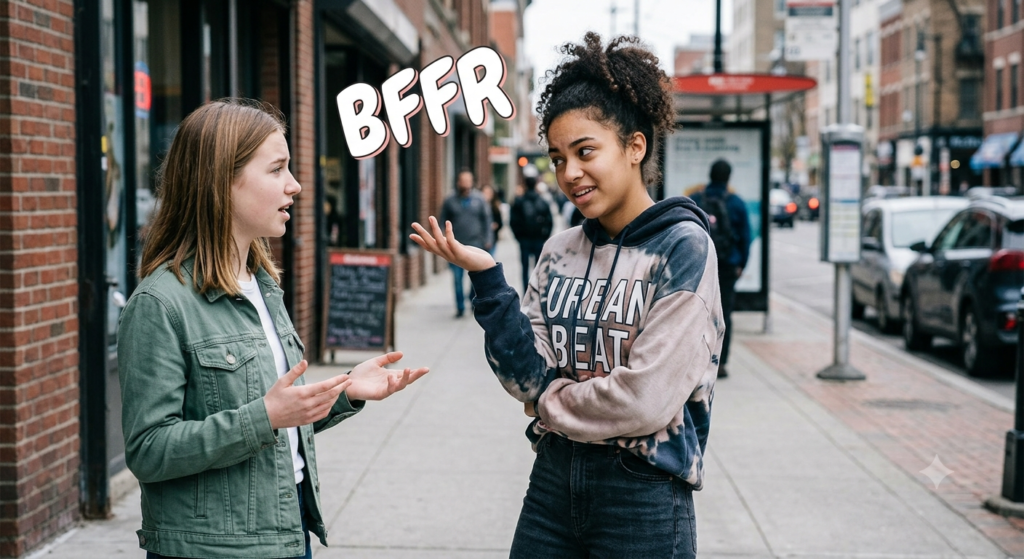
Scrolling through TikTok comments or group chats these days often leaves people pausing at short strings of letters that pack a punch. One of those strings that keeps popping up is the focus of this deep dive into bffr meaning. At its core this slang delivers a sharp reality check, telling someone to drop the act and face facts. It carries attitude, a touch of humor, and enough edge to stop a wild claim in its tracks. Readers who want to keep up with modern online talk will find everything here, from the basic definition to the cultural roots and practical ways people drop it into messages.
The phrase sits comfortably among other internet abbreviations that evolved from longer spoken expressions. It thrives in casual spaces where speed matters and tone needs to come across without extra words. Understanding bffr meaning helps decode reactions that range from playful disbelief to genuine frustration. This piece walks through the layers so anyone can spot it, use it correctly, and avoid awkward mix-ups with similar-looking terms.
What BFFR Actually Stands For in Modern Slang
People searching for bffr meaning usually land on the primary expansion “be fucking for real.” The full phrase acts as an imperative that demands honesty or points out that something sounds too ridiculous to accept at face value. It builds on the older “be for real” by adding intensity through the middle word, turning a mild call-out into something sharper and more memorable.
Secondary uses exist but stay far less common. In certain friendship circles the letters sometimes stretch to “best friends for real,” stressing a genuine bond rather than the usual forever promise. Context almost always clarifies which version applies. On platforms heavy with Gen Z users the disbelief version dominates by a wide margin. The letters appear in lowercase more often than all caps, matching the relaxed typing style of younger users who skip capital letters for speed and vibe.
The term functions as a complete reaction on its own or sits at the end of a sentence for extra emphasis. Someone might type it after reading an over-the-top story or hearing an unrealistic plan. The effect lands somewhere between “are you serious” and “get out of here with that nonsense.” Because the language stays informal and includes strong wording, it fits texting, comments, and stories far better than work emails or classroom discussions.
Tracing the Origins Back Through AAVE and Social Media
Roots of the expression reach into African American Vernacular English, where variations of “be for real” have circulated for years as a way to test sincerity. Speakers used the longer form to challenge exaggeration or call attention to behavior that ignored obvious facts. Early online traces of the intensified version appear in tweets from the late 2000s and early 2010s, though the shortened four-letter version stayed relatively quiet until much later.
The big jump into mainstream visibility happened in 2022. A clip from an Instagram Live featuring rapper Slump6s saying the phrase out loud got remixed into a TikTok sound. Creators latched onto the audio and started layering it over reaction videos, storytimes, and comment screenshots. Around the same period a frequent commenter on the platform used the acronym under countless posts, amplifying its reach. Views on related hashtags climbed into the hundreds of millions within months, and the term spilled over to Twitter, Instagram, and everyday texting.
Prior to that surge the same letter combination occasionally stood in for friendship-related ideas, but those uses faded once the stronger meaning took hold. The path from spoken AAVE phrase to viral abbreviation follows a familiar pattern for internet slang. Something useful in conversation gets shortened, rides a popular sound or meme, and suddenly appears everywhere younger people talk online. That journey explains why bffr meaning feels both fresh and grounded at the same time.
How People Drop BFFR Into Everyday Messages
Using the term successfully depends on reading the room. In close friend groups it often lands as light teasing. A buddy claims they can finish an entire pizza alone after already eating dinner, and the reply comes back with the four letters plus a laughing emoji. The tone stays playful while still pointing out the stretch.
In public comment sections the same letters can carry more bite. When a creator posts a dramatic story that feels exaggerated, viewers type the acronym to signal skepticism. The delivery stays short so it fits the fast pace of scrolling. Pairing it with additional context helps when the situation needs more clarity. Someone might write “you really think that plan will work? bffr” to keep the message clear and direct.
Tone shifts with capitalization and surrounding words. All caps can read louder and more annoyed. Lowercase keeps things chill. Adding “like” or “cmon” softens the edge further. The key stays matching the intensity of the claim being challenged. Overusing it risks making every reply sound confrontational, so most people save it for moments that truly feel off-base.
Real Conversation Examples That Show the Tone
Picture a group chat where one person announces they pulled an all-nighter studying yet somehow still aced a test they barely reviewed. A friend might answer simply with the acronym. The message works because everyone knows the claim sounds unlikely. Another common scene involves dating talk. Someone insists their situationship is about to turn serious after months of mixed signals. The reply lands as a reality check that forces a more honest look at the pattern.
On TikTok the pattern repeats in comments under storytime videos. A creator describes an unbelievable encounter and the top replies include the four letters plus short follow-ups. Text exchanges between siblings often use it when one invents an excuse for forgetting chores. The term cuts through the excuse without needing a long lecture. These everyday moments keep the slang alive because it solves a real communication need: calling out nonsense quickly and with attitude.
“You bumped into my brother at the airport and somehow forgot to say hi? BFFR.”
That kind of line captures the mix of surprise and mild call-out that defines most uses. Another frequent style appears in reaction to celebrity news or sports claims that stretch credibility. Fans type the letters when a prediction feels wildly optimistic or a rumor sounds manufactured. The shared understanding across platforms makes the response land without extra explanation.
Comparing BFFR to Similar Slang Terms
Several related expressions sit in the same neighborhood of meaning. “FR” or “for real” asks for confirmation or emphasizes truth. Adding the extra letters and intensity turns that confirmation into a demand. “BFR” drops the middle intensifier and stays milder. “Are you for real” spells the question out fully and sounds slightly more formal. “Get real” from earlier decades carries a similar spirit but lacks the modern internet flavor.
Friendship abbreviations create the biggest chance for confusion. “BFF” means best friends forever and appears in much softer contexts. The extra letter in the longer version changes everything once the dominant meaning takes over. Other nearby terms like “IJBOL” for laughing hard or “WDYM” for what do you mean serve different purposes and rarely overlap in usage. Knowing the distinctions keeps conversations clear and prevents mixed signals when someone reaches for the four letters.
A quick look at frequency shows the disbelief version far outpaces any friendship reading on major platforms. Search trends and comment patterns confirm that people reach for it when something feels off rather than when they want to celebrate a bond. That consistency helps new users learn the intended tone fast.
BFFR Meaning Across Different Platforms and Age Groups
TikTok remains the strongest home for the term because short-form video and rapid comments reward compact reactions. Creators use it in on-screen text, voiceovers, and reply stitches. Instagram leans more toward Stories and DMs where the letters appear in private exchanges or public caption replies. Twitter and its successors see the acronym in quote tweets and threads that challenge bold statements.
Younger users treat it as standard vocabulary while older groups sometimes need a quick explanation the first time they encounter it. Parents or teachers who keep up with slang often recognize the pattern from earlier generations of call-out phrases. The gap closes once people hear a few examples in context. Cross-platform spread means the same four letters travel from one app to another without losing their punch.
Regional differences stay minimal because the internet flattens most slang travel. The AAVE foundation gives the phrase cultural weight that many users respect even when they adopt it casually. That background encourages thoughtful use rather than empty repetition.
When the Term Fits and When It Misses the Mark
Best moments include lighthearted challenges among friends, reactions to exaggerated online stories, and gentle pushback against unrealistic plans. The slang works well in group chats where everyone already shares the same humor. It also shines in public comments when a post invites skepticism.
Situations that call for softer language include professional settings, conversations with people who prefer milder speech, or moments when feelings already run high. Dropping the strong version into a serious discussion about personal struggles can land poorly. Knowing the audience prevents the acronym from sounding harsher than intended. Many users pair it with emojis or follow-up sentences to fine-tune the tone and keep relationships intact.
Over-reliance can dull the impact. Saving the term for genuine moments of disbelief keeps it effective. When every mild claim draws the same response, friends start tuning it out. Balance and timing turn the four letters into a useful tool instead of background noise.
Cultural Impact and the Bigger Picture of Internet Language
Slang like this reflects how language moves faster online than in traditional spaces. A phrase rooted in spoken community speech can travel through a single viral sound and become everyday vocabulary for millions. The process highlights both the creativity of digital communities and the way older expressions gain new life.
Some observers note the importance of acknowledging origins rather than treating every new acronym as pure invention. Recognizing the AAVE foundation adds depth and encourages respectful adoption. At the same time the term’s spread shows how useful tools get shared widely once they prove effective at conveying attitude and clarity in limited characters.
The longevity of the expression already stretches beyond the initial 2022 peak. Continued appearance in comments and chats suggests it has settled into the permanent slang toolkit rather than fading as a temporary trend. That staying power makes learning the full picture worthwhile for anyone who spends time in digital conversations.
Related Keywords and Nearby Expressions Worth Knowing
People exploring this topic often search nearby phrases such as Gen Z slang, TikTok acronyms, be for real meaning, FR slang, and AAVE internet terms. Other popular abbreviations that travel in the same circles include IJBOL for intense laughter, GYATT for exaggerated reaction to appearance, and WSG for what’s good. Each serves a distinct purpose yet shares the same preference for speed and attitude.
Understanding clusters of related language helps readers decode entire comment sections instead of single words. When several of these terms appear together the overall tone of a conversation becomes easier to read. The same pattern holds for older expressions that evolved into modern short forms. Tracking those connections turns isolated definitions into a fuller picture of how people talk online today.
Practical Tips for Using the Term Smoothly
Start by noticing how friends already employ it. Matching local style prevents the letters from feeling forced. Practice in low-stakes chats before dropping them into public replies. Pay attention to the claim being challenged so the intensity matches the moment. A wild story earns a stronger delivery than a mild exaggeration.
Combine the acronym with clarifying words when needed. A short sentence before or after keeps the message clear for anyone still learning the slang. Avoid pairing it with actual hostility. The goal stays calling out nonsense rather than starting unnecessary conflict. With a little observation most people find a natural rhythm that fits their own voice.
A Closer Look at Tone Variations and Delivery
Lowercase delivery feels casual and almost conversational. All caps raises the volume and can signal stronger frustration. Adding punctuation or emojis shifts the mood further. A period after the letters can feel final while an exclamation mark adds energy. Some users write the full phrase first and then the abbreviation for emphasis.
Voice notes and video reactions sometimes spell the letters out loud, turning the acronym back into spoken words. That full delivery often carries extra attitude through tone of voice. Written versions rely on context and surrounding text to convey the same feeling. Both approaches keep the core meaning intact while adapting to the medium.
Table of Common Contexts and Typical Reactions
| Context | Typical Claim | Common Reply Style | Tone Level |
|---|---|---|---|
| Friend group chat | Over-the-top personal story | Short acronym plus emoji | Playful |
| TikTok comment | Dramatic storytime | Standalone letters | Skeptical |
| Dating talk | Unrealistic relationship hope | Acronym with follow-up question | Direct |
| Sports or news claim | Wild prediction | Letters plus short dismissal | Annoyed |
| Sibling exchange | Excuse for forgotten task | Quick reality check | Familiar |
This overview shows how the same four letters adapt across situations while holding their core function. The table highlights patterns rather than rigid rules, since individual conversations always add their own flavor.
Quotes That Capture the Spirit of the Term
“You think you can play in the NBA? Cmon bffr you can’t even get off the couch.”
That classic style example shows the mix of challenge and humor that defines many uses. Another common flavor appears in reactions to everyday exaggeration.
“She said she’s never heard of Taylor Swift. BFFR.”
Short, sharp, and effective. These lines illustrate why the slang sticks: it delivers attitude in minimal space while remaining easy to understand once the definition clicks.
FAQ
What is the most common bffr meaning people search for?
The dominant expansion people look up is “be fucking for real.” This version serves as a direct call for honesty or a reaction to something that feels unbelievable or overstated. It appears most often in texting and social media comments where users want to challenge a claim without writing a full paragraph. Context almost always makes the intent clear, and the term has stayed popular well beyond its initial viral wave.
Does bffr meaning ever refer to friendship?
A secondary reading of “best friends for real” surfaces occasionally in private messages or older posts. That version emphasizes authenticity in a close relationship rather than the usual forever promise. However the disbelief meaning overwhelms the friendship reading on major platforms today. Checking the surrounding conversation prevents mix-ups between the two possibilities.
How did the current bffr meaning become popular?
The phrase existed in spoken form within AAVE communities for years before a 2022 TikTok sound featuring the words out loud pushed the shortened version into widespread use. Remixes, reaction videos, and frequent comment use accelerated the spread across apps. Once the acronym proved useful for quick call-outs it settled into regular rotation in chats and captions.
Is it okay to use the term in professional settings?
Most people keep the acronym out of work emails, formal meetings, and classroom discussions because of the strong language and casual tone. It fits best in informal spaces among people who already share the same slang vocabulary. Choosing milder alternatives like “are you serious” or “that seems unlikely” works better when the audience or setting calls for restraint.
Can bffr meaning change depending on capitalization?
Lowercase versions usually feel more relaxed and conversational. All caps can read as louder or more emphatic, similar to raising one’s voice. Surrounding words and emojis influence the final tone more than capitalization alone. Users adapt the presentation to match the energy of the moment while keeping the core definition stable.
Why does understanding this slang matter for everyday communication?
Online conversations move quickly and rely on shared shorthand. Knowing what the letters signal helps readers catch the intended attitude instead of missing the point. It also reduces awkward misunderstandings when friends or followers drop the term into replies. Staying current with these expressions makes digital spaces feel more navigable and less confusing.
Conclusion
The full picture of this popular slang reveals a compact tool that packs attitude, clarity, and cultural history into four letters. From its roots in spoken community language to its explosion across short-form video and texting, the expression continues to serve a clear purpose: demanding honesty when claims stretch too far. Readers who now understand the primary definition, the secondary possibilities, the best moments to use it, and the related terms around it can navigate modern chats with more confidence. Keeping the tone matched to the audience and the situation ensures the acronym stays effective rather than overused. As internet language keeps evolving, phrases that prove this useful tend to stick around, ready for the next round of wild stories and bold claims that need a quick reality check.